
COOKING WITH A STARGAZER
Follow this advice and you'll be a cast iron pro in no time.
CHECK THE BURNER SIZE
Use a burner that closely matches that size of the skillet for better heat distribution.
PREHEAT YOUR PAN
This one is important! Preheat your cast iron to ensure even heating and promote non-stick cooking. We recommend 3-5 minutes on low heat before turning up the temperature or adding any food.
WATCH THE TEMPERATURE
Just because it's cast iron doesn't mean you should crank up the heat. Typically low-medium/medium should be high enough to get the job done.
CLEANING YOUR STARGAZER
Step #1
Allow your skillet to cool.
Step #2
Place it in the sink under hot running water. Add some dish soap if you like.
Step #3
Scrub with a sponge or chain mail scrubber and rinse thoroughly.
Step #4
Dry your cast iron immediately and completely. You can put it on the stovetop on low heat for a few minutes to be sure it's dry.
CLEANING QUESTIONS
Can I use soap to clean my cast iron cookware?
Yes. Some people advise against this, concerned that the soap will damage the seasoning. The fact is that when the oil polymerizes to form a hard seasoning layer, it becomes very difficult to break down.
You would have to soak the skillet in soapy water for a long time to see any effect on the seasoning (but please don’t try this).
How do I remove stuck-on food? I thought cast iron was supposed to be non-stick?
Don’t be discouraged. There is a break-in period with cast iron and your patience will pay off.
You'll want to use a stiff brush or chainmail scrubber to remove any food stuck to your skillet. For the really stubborn bits, add a little water, bring it to a gentle boil and use a spatula to scrape them away.
Note: You should use a little extra cooking oil the first few times you use your new skillet. As the seasoning builds up, food will stick less and less. After cooking in your skillet a few times, you’ll find the food releases effortlessly.
Always remember to preheat your skillet on LOW for 5-10 minutes before turning up the heat or adding any food. This will aid in non-stick cooking and prevent any damage to you skillet due to thermal shock.
I found rust on my skillet, what should I do?
Don’t panic! Rust won’t damage your skillet unless it is left rusty for an extended period of time. Rust just means that part of your skillet wasn’t thoroughly coated with seasoning or you left it wet for too long. After all, rust is just iron oxide and is completely harmless.
All you need to do is scrub the rust off with some hot water and an abrasive scouring pad. Dry thoroughly and re-season immediately. No harm done.
Always be sure to dry your skillet immediately and completely after it has been exposed to water to avoid rust.
Is your cookware dishwasher safe?
No. It would probably survive but we don’t recommend it. Our warranty does not cover damage due to dishwasher use.
Should I let my pan air dry?
Standing water + cast iron = rust! Make sure your pan is thoroughly dried after cleaning. You can pop it on the stove on low heat to ensure it's fully dry.
SEASONING YOUR STARGAZER
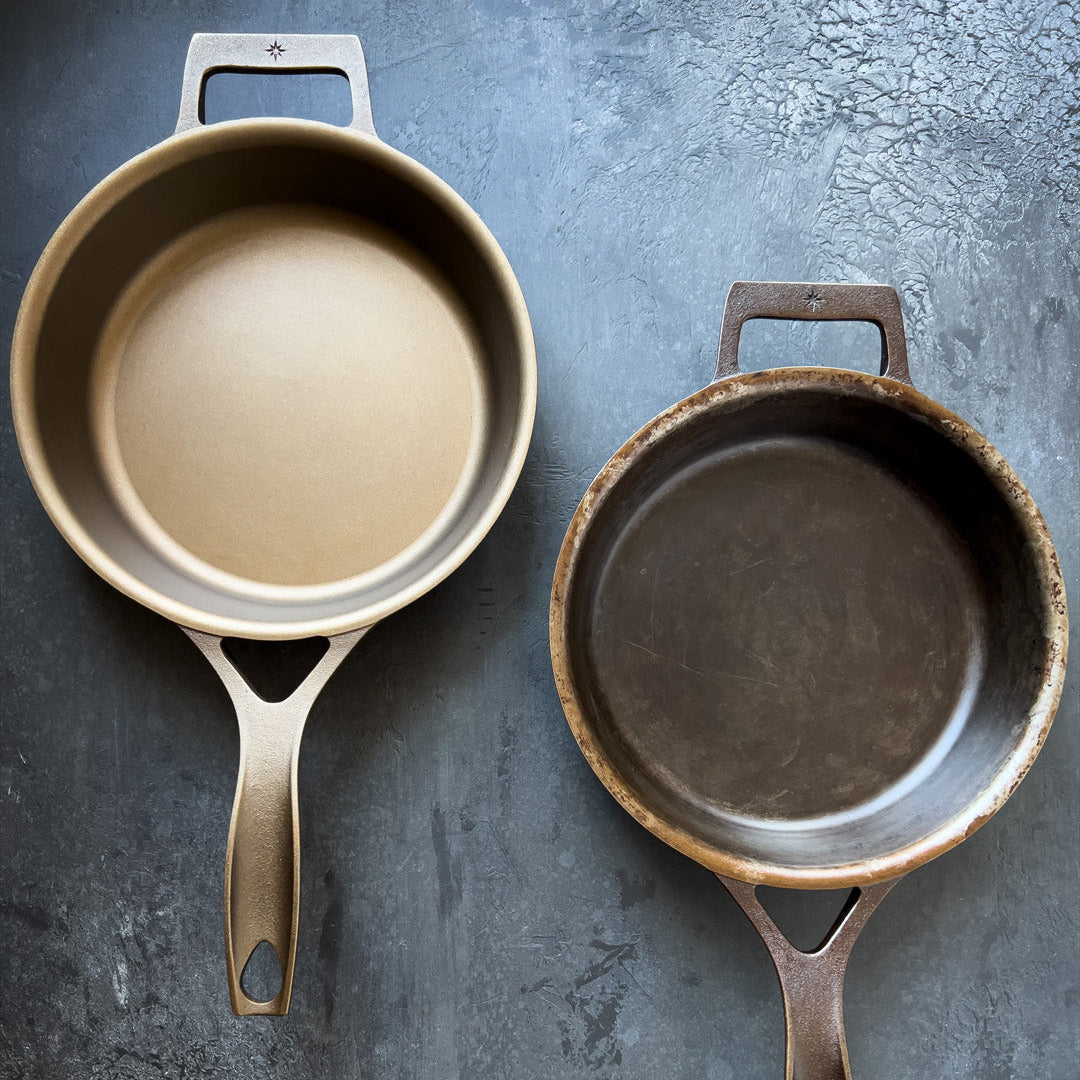
Just remember this: seasoning will come and go. Your pan will come with a nice bronze hue to it, but with time and cooking, it'll become a darker color (and it'll probably look splotchy along the way - which is okay!)
WHAT IS SEASONING?
Seasoning is a thin layer of hardened fat or oil that seals the iron to keep moisture out. Seasoning will come and go with regular use, but should be reapplied if you see bare iron or any rust starting to creep in. High smoke point oils like grapeseed or avocado work best.
MAINTENANCE SEASONING
These are done on the stovetop. You can do this regularly to maintain your cooking surface.
STEP #1
Preheat your pan on the stove over low heat for 5-10 minutes.
STEP #2
Wipe a thin coat of oil onto the cooking surface and heat for another 5-10 minutes, or until the oil looks dry. This will help maintain a well-seasoned, non-stick cooking surface and protect the cast iron during storage.
FULL SEASONING
This is done in the oven. You'll want to do this periodically for a full restoration of all surfaces. We recommend 2-3 layers of seasoning on bare iron.
STEP #1
Preheat the oven to 200 °F. Wash and dry your pan completely.
STEP #2
Place it in the preheated oven for 10 minutes, then carefully remove using hand protection.
STEP #3
With a cloth or paper towel, spread a thin coat of oil on all surfaces: top, bottom, handles, etc. Using a fresh cloth, wipe off all excess - only a slight sheen should remain.
STEP #5
Put it back in the oven, upside down. Increase the temperature to 475 °F for 1 hour.
STEP #6
Turn off the oven and let your cast iron cool before removing it.
SEASONING QUESTIONS
What is the difference between bare and seasoned?
We offer our cookware in two finishes: bare and seasoned. Our bare skillet is ideal for people who prefer to season their own cookware, and will need to be seasoned (by you) before it is used. This skillet will arrive coated in mineral oil to protect it in transit. Just wash it and season it however you like.
Our seasoned skillet has already been seasoned (by us) and will arrive ready to go, right out of the box.
What do you recommend seasoning my cast iron with?
We use a blend of canola, grapeseed, and sunflower oil to season our cookware in-house, so any of those options would work well for you at home. Avocado oil is also a popular choice. Whatever you use, just make sure it has a high smoke point!
What should I do if I lost some seasoning on the cooking surface?
You'll want to add a maintenance seasoning layer. Your seasoning may look splotchy as it builds but it'll darken and even out as you continue to cook with your cast iron.
AT THE END OF THE DAY,
JUST KEEP COOKING